

Why Does SEO Matter?
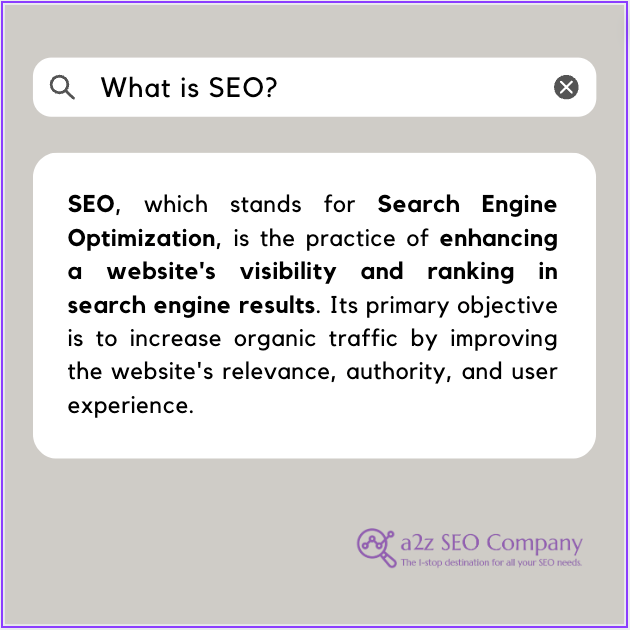
In today’s competitive online marketplace, having a well-optimized website can significantly impact your business’s success. Here’s why SEO matters:
-
Increased Visibility: Higher rankings in search engine results mean more visibility for your website, leading to increased exposure to potential customers.
-
Higher Quality Traffic: Organic traffic generated through Search Engine Optimization tends to be more relevant and valuable since it consists of users actively searching for information related to your offerings.
-
Builds Credibility and Trust: Websites that appear at the top of search results are often perceived as more credible and trustworthy by users, leading to higher click-through rates.
-
Cost-Effectiveness: While paid advertising can drive traffic to your site, SEO offers a cost-effective long-term solution for maintaining consistent organic traffic without the ongoing expense of paid ads.
Key Components of SEO
Understanding the key components of Search Engine Optimization is essential for implementing an effective optimization strategy. Here are the fundamental elements:
-
On-Page SEO: This involves optimizing individual web pages to rank higher and earn more relevant traffic. On-page SEO factors include keyword research, meta tags, headings, URL structure, and content optimization.
-
Off-Page SEO: Off-page SEO focuses on increasing your website’s authority and relevance through external factors such as backlinks (links from other websites), social media signals, and online mentions.
-
Technical SEO: Technical SEO involves optimizing the technical aspects of your website to improve its crawlability, indexability, and overall performance. This includes factors like site speed, mobile-friendliness, crawl errors, XML sitemaps, and site architecture.
-
Content Optimization: Creating high-quality, relevant, and engaging content is crucial for Search Engine Optimization success. Content optimization involves keyword research, creating valuable content that satisfies user intent, optimizing for readability and user experience, and regularly updating and refreshing content.
-
Local SEO: For businesses targeting local customers, local SEO is essential. This involves optimizing your website and online presence to appear in local search results, including Google My Business optimization, local citations, and customer reviews.
How to Implement SEO
Implementing Search Engine Optimization involves a combination of technical know-how, strategic planning, and ongoing optimization. Here’s how to get started:
-
Keyword Research: Identify relevant keywords and phrases that your target audience is searching for using keyword research tools like Google Keyword Planner, SEMrush, or Moz Keyword Explorer.
-
On-Page Optimization: Optimize your website’s meta tags (title tags, meta descriptions), headings, URLs, and content with targeted keywords while ensuring readability and relevance.
-
Technical Optimization: Ensure your website is technically sound by addressing issues like site speed, mobile responsiveness, URL structure, and crawl errors.
-
Content Creation and Optimization: Create high-quality, informative content that addresses the needs and interests of your target audience. Optimize your content with relevant keywords, headings, and multimedia elements.
-
Link Building: Earn backlinks from reputable websites in your industry to improve your website’s authority and relevance. Focus on acquiring high-quality backlinks through guest blogging, outreach, and content promotion.
-
Monitor and Analyze: Continuously monitor your website’s performance using tools like Google Analytics and Google Search Console. Track key metrics such as organic traffic, keyword rankings, and conversion rates to identify areas for improvement.
Conclusion
Search Engine Optimization is a dynamic and ever-evolving field that requires dedication, patience, and ongoing effort. By understanding the fundamental principles of Search Engine Optimization and implementing best practices, you can improve your website’s visibility, attract more organic traffic, and ultimately, achieve your online goals. Start by focusing on the basics outlined in this guide and continue to learn and adapt to the changing landscape of search engine optimization. With persistence and strategic optimization, you can position your website for long-term success in the digital realm
Leave a Reply